Reference reading
Willful Blindness
The unopened source can do a surprising amount of work for a settled opinion.
Deliberately avoiding available inquiry or evidence in order not to confront an unwelcome reality.
Imagine this: A reviewer has built a little bookstand that holds a volume securely shut. The page markers are arranged beautifully; none can reach a page.
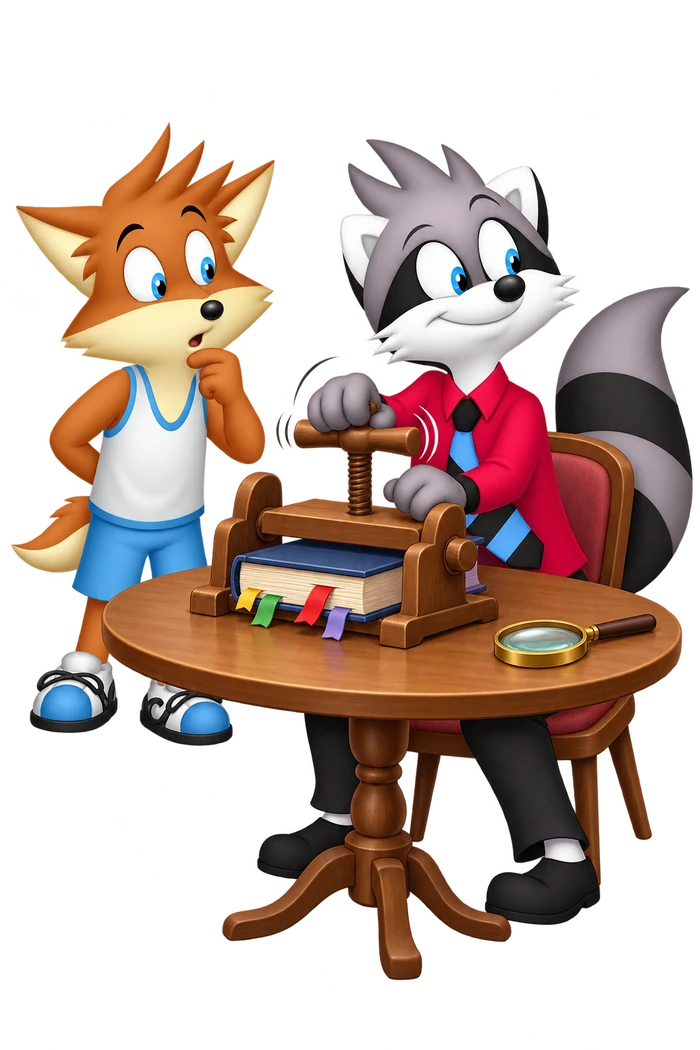
How the pattern works
The avoided question is often recognizable. A favored essay may have misquoted its target; a prestigious mentor may have appropriated someone’s work; the evidence behind a satisfying denunciation may be weak. Willful Blindness keeps the relevant inquiry at a distance so that an unwelcome reality need not be confronted.
The avoidance can look industrious. One reads commentary on commentary, studies the author’s biography, or organizes an ever more elaborate list of reasons why the original source is unnecessary. What distinguishes the pattern is not the quantity of reading but the purposeful gap around something one could reasonably investigate.
What it costs the work
Judgment borrows confidence from ignorance it has helped maintain. Others may receive a recommendation or accusation without knowing that its maker has deliberately left a relevant question unanswered. A cultural circle can become especially fragile when everyone relies on everyone else’s reluctance to look.
A distinction worth keeping
Limited time, restricted access and an inability to resolve every dispute are ordinary conditions of inquiry. Avoiding unnecessary or unsafe exposure can be justified. Willful Blindness concerns deliberate avoidance in order not to confront an unwelcome reality. Negligence can overlook a source through disregard of care; Self-Deception can interpret a source protectively after reading it.
What a useful response can change
Name the narrow question being avoided rather than promising to research everything. A claim about a quotation may require checking the surrounding passage, not mastering an entire intellectual movement.
Where investigation is not reasonably possible, the public claim can be limited accordingly. “I have not checked this account” gives readers information that an unwarrantedly confident verdict withholds.
If inquiry brings an inconvenient result, the next decision is what the evidence changes: an attribution, an allegation, a recommendation or confidence itself. Opening the book is useful because it permits an answer to affect conduct.
Questions for reflection
- Which question am I spending effort not to ask?
- What claim should become narrower until that question is answered?
Other perspectives
On any other subject no one's opinions deserve the name of knowledge, except so far as he has either had forced upon him by others, or gone through of himself, the same mental process which would have been required of him in carrying on an active controversy with opponents.
John Stuart Mill · On Liberty · Read the source
Mill links knowledge to testing an account against opposition. His standard invites a specific check of the avoided question, not an obligation to master every dispute.
Many notions of science are abstract, not only because they cannot be understood without a long apprenticeship in the science (which is equally true of technical matters in the arts), but also because the whole content of their meaning has been framed for the sole purpose of facilitating further knowledge, inquiry, and speculation.
John Dewey · How We Think · Read the source
Dewey explains technical abstractions by their role in further inquiry. Difficulty is therefore not a reason to condemn a source as evasive; the issue is whether the difficulty serves investigation or avoids it.