Too little
Taking the turn
Here, this is what you should do.
Your impatience removes the choice that makes the game theirs.
Your knight is ready. That does not make it your turn.
A willingness to allow worthwhile processes their necessary time.
At the closed window, a cat watches the garden through a long interval in which nothing much happens. There is no need to make the next moment arrive by knocking something over. Human patience likewise gives an appropriate process time. When your chess partner is thinking, waiting is part of the game. You can agree on a reasonable pace without taking over their turn.
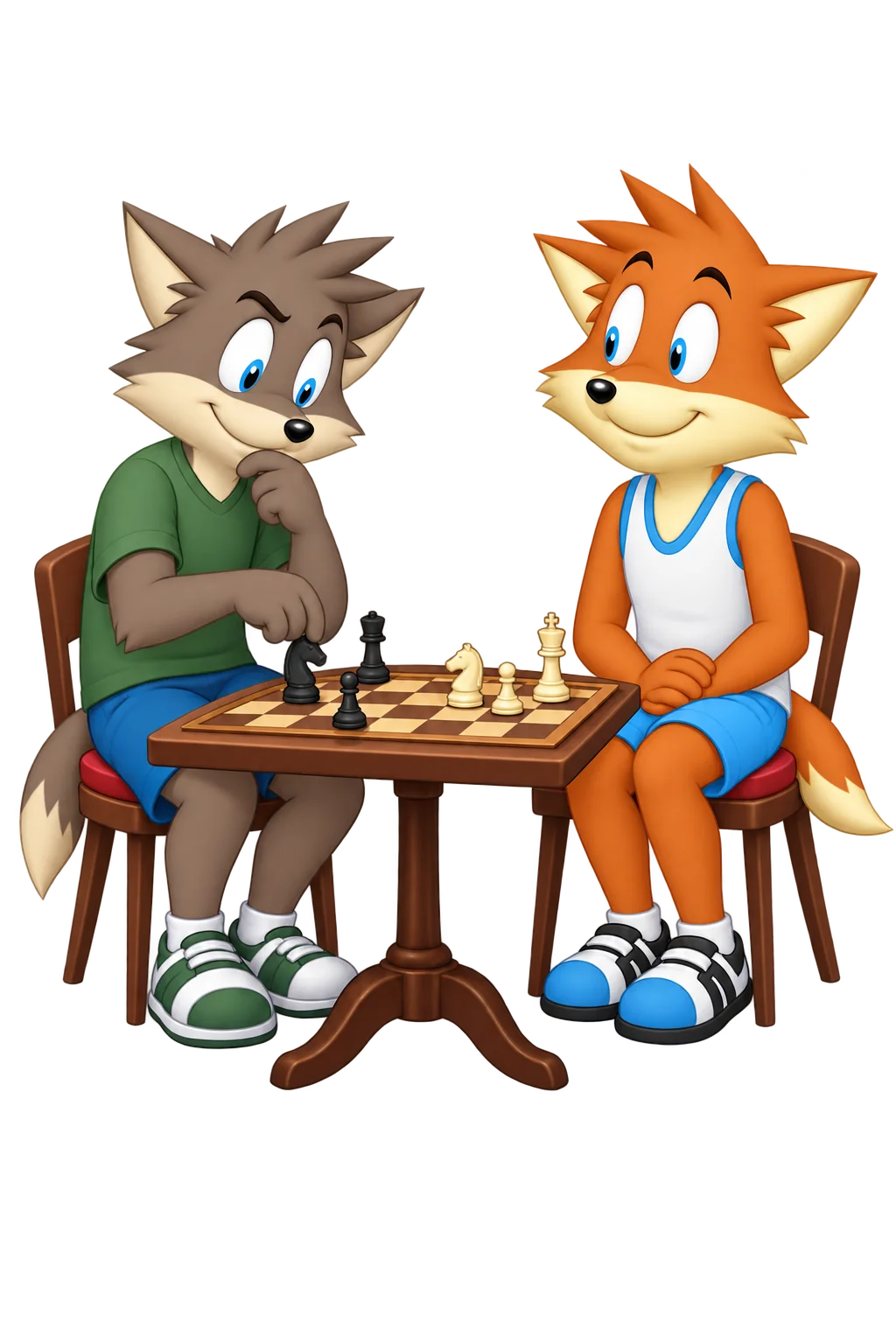
Your friend studies the chessboard. You can already see a move for their knight, and your hand has begun an unsolicited journey across the table. You bring it back to your own pieces. The game includes their thinking, not only the moves you would make. Your knight remains magnificently prepared. For the moment, its most useful contribution is staying where it belongs.
An illustrative everyday situation
Let a chess partner choose their own move rather than moving their piece to end your wait.
Too little
Here, this is what you should do.
Your impatience removes the choice that makes the game theirs.
A fitting response
Take a moment; I’m still here.
Waiting protects the other person’s part in the activity.
Pursued too far
We must sit here for as long as this takes.
Patience becomes a rule that neither player may reconsider.
Waiting is useful when it protects something worth allowing.
If either person has limited time, agree a shorter game, a pause or a different activity. Patience includes an honest limit; it does not require silently enduring an arrangement that no longer works.
A little room can allow someone to decide, learn or finish a thought in their own way. It can also prevent the extra friction caused by repeated prompting. Patience does not guarantee that waiting will produce the result you want.
A friend pauses mid-sentence. Give them a moment before supplying the word you assume they need. They may welcome help; ask rather than taking over.
You send an ordinary invitation. Before a second message, consider whether you gave the person a reasonable opportunity to answer.
Nonpossessiveness releases a claim to control the other person’s choice. Patience lets that choice take appropriate time.
Attentiveness notices whether someone is thinking, stuck or ready for help. Patience should respond to that reality rather than worship delay.
Sighing, tapping and repeatedly saying “no rush” can imitate Patience while making the wait costly. Genuine patience does not punish the time it grants.
Putting off a needed conversation indefinitely can look patient. Patience serves an appropriate process, not the wish never to decide.
Ask what the waiting is allowing.
Keep your attention without supplying the other person’s action.
Name a practical time limit before resentment begins to choose your tone.
During one ordinary shared activity, allow a reasonable pause without filling it. If time matters, state the limit kindly and agree what to do next.
Give another person time to make their own move.
What am I trying to hurry that belongs to someone else?
Would a clear time agreement help more than another reminder?
Patience does not require tolerating neglect, harmful delay or mistreatment. This exercise concerns ordinary waiting, not postponing necessary help.
About these practices · DisclaimerSeven selections to return to through the week. Follow a source link to read the surrounding passage.
This time Alice waited patiently until it chose to speak again.
Alice leaves a pause in her encounter with the Caterpillar. The chess scene likewise allows the other participant a turn; neither requires waiting without a limit.
His accurate examination of things in consultations, and patient hearing of others.
Marcus recalls Antoninus’s way of listening. A shared activity includes another person’s deliberation, not merely the result you would choose.
It is not important that he should mature as soon as an apple-tree or an oak.
Henry David Thoreau · Walden · Conclusion · English original, 1854 · excerpt
Thoreau questions a single timetable for development. A chess partner’s pause need not conform to the pace at which you already see a move.
“I would wish not to be hasty in censuring anyone; but I always speak what I think.”
Jane Austen · Pride and Prejudice · Chapter IV; Jane speaking · English original, 1813 · excerpt
Jane names a wish not to rush a judgment. Patience can keep a question open without requiring dishonest agreement.
This sharpness and violence of desires more hinder than they advance the execution of what we undertake; fill us with impatience against slow or contrary events, and with heat and suspicion against those with whom we have to do.
Montaigne considers how an urgent desire can obstruct the work itself. Repeatedly urging a chess partner onward may make thinking harder without improving the game.
Of so many parts as make up a sufficiency, patience is the most sufficient.
In a rueful discussion of learning late in life, Montaigne names patience as a remaining resource. The page borrows that resource without adopting his claim that late learning has little use.
Either teach them better if it be in thy power; or if it be not, remember that for this use, to bear with them patiently, was mildness and goodness granted unto thee.
Marcus asks for patience where immediate correction is unavailable. The scene concerns an ordinary thinking pause; this is not a duty to endure danger or continuing mistreatment.
Read freely, follow the twelve-virtue program, or adapt this collection in My Virtues. A playful image can prompt a serious choice.