Too little
Treating access as permission
I can see them, so the picture is mine to take.
A visible person is reduced to material for your account.
The best photograph may be the one you decline to take.
Careful judgment about what is appropriate to disclose.
Discretion gives personal information and exposure thoughtful limits. A visitor can carry an image or story far beyond the encounter in which it arose. Consider what is yours to record, what permission covers and what need a later disclosure serves.
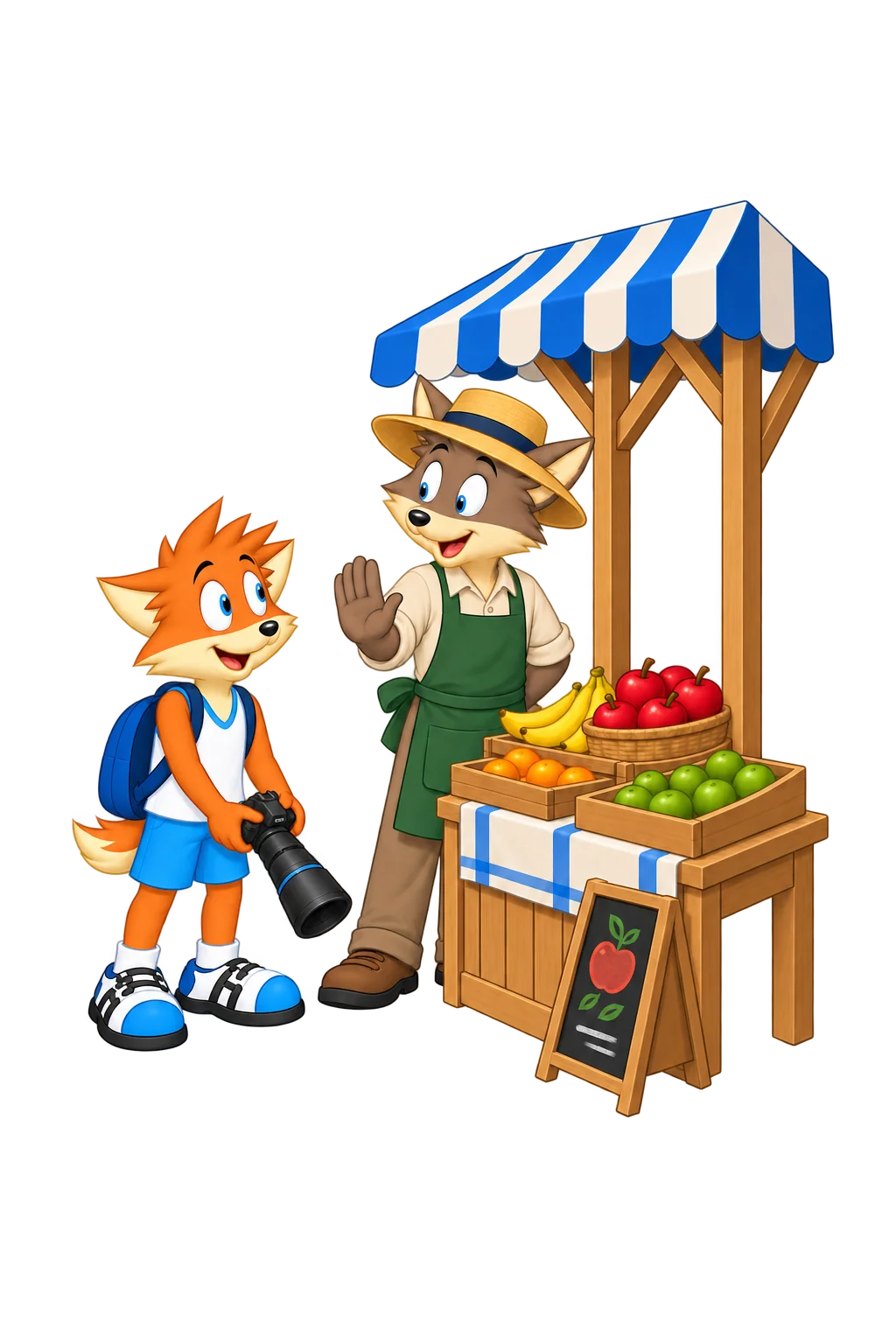
At a market, you ask the seller about a portrait. They decline. Lower the camera and accept the answer. You can still appreciate the stall, buy something if you wish, and remember the exchange without making the seller part of your public travel story. A good picture is a possibility; their permission is a separate question.
An illustrative everyday situation
Lower the camera when a market seller declines a portrait.
Too little
I can see them, so the picture is mine to take.
A visible person is reduced to material for your account.
A fitting response
Of course. I will put the camera away.
The refusal changes what you do without becoming an argument.
Pursued too far
A discreet person should never report anything.
Useful disclosure and appropriate requests for help are wrongly treated as betrayal.
Permission has a scope; a good story does not enlarge it.
An agreement to a photograph does not automatically cover every use, identifying detail or audience. When sharing could expose someone, choose a less revealing account or leave it out. Appropriate reporting of harm is a different question from casual publication.
You can preserve the dignity of an encounter after leaving it. A thoughtful omission may make a travel account more trustworthy, because the people in it are not treated as props. There is no need to disclose private details to prove that the story really happened.
A stranger shares something personal. Tell friends about your own experience without repeating the identifying detail that made the conversation memorable.
Check what the people pictured are comfortable sharing. Permission to be in a picture and permission to publish it can differ.
Curiosity asks to understand; Discretion limits what you seek, keep and pass on.
Fairness considers who benefits and who bears the cost of exposure. Discretion acts on the particulars of this disclosure.
Removing a name while leaving recognizable details can imitate Discretion. Genuine care considers whether the person can still be identified.
Calling concealment of serious harm “discreet” misuses the virtue. Genuine Discretion considers appropriate disclosure and support rather than automatic silence.
Ask before an optional personal photograph or identifying account.
Treat refusal as an answer rather than an opening negotiation.
Review audience and identifying details before sharing.
Respect privacy and refusal. Discretion does not require concealing wrongdoing or preventing someone from seeking appropriate help.
Review an optional photograph or anecdote you might share. Check permission and identifying details; ask, reduce the exposure or leave it unshared.
Let another person decide what remains private.
Who gains from this story, and who becomes exposed?
Would this detail still be necessary without the desire to impress?
Respect privacy and refusal. Discretion does not require concealing wrongdoing or preventing someone from seeking appropriate help.
About these practices · DisclaimerSeven selections to return to through the week. Follow a source link to read the surrounding passage.
I wished to have had a room to myself, for their attention, and rather distressing observation, embarrassed me extremely.
The traveler herself finds sustained observation uncomfortable. That reversal matters when a visitor turns someone else into the subject of a camera.
I believe there’s no secret of the human heart into which we wouldn’t pry.
Miss Lavish’s declaration exposes the intrusiveness that can hide in a desire for interesting stories. Another person’s life is not raw material owed to a visitor.
In all I was received with the same courtesy, but a few of the people asked Shinondi not to take me into their houses, as they did not want me to see how poor they are.
Some residents decline a visit to their homes. The passage preserves their refusal rather than treating the traveler’s interest as entitlement.
Glory and curiosity are the scourges of the soul; the last prompts us to thrust our noses into everything, the other forbids us to leave anything doubtful and undecided.
Montaigne names the intrusiveness and premature certainty that can distort inquiry. The point here is to recognize curiosity’s counterfeit, not to abandon learning.
Indeed, men are often accustomed to say, I have told you all my affairs, will you tell me nothing of your own?
Epictetus describes pressure to exchange private information. Another person’s disclosure does not oblige a traveler to disclose in return.
Rachel gave the gate a push; it swung open, and, seeing no one about and judging that nothing was private in this country, they walked straight on.
Woolf’s travelers mistake an open gate for permission to enter. The narrator exposes how easily a visitor can assume privacy does not count elsewhere.
That is, spend not thy time in thinking, what such a man doth, and to what end: what he saith, and what he thinks, and what he is about, and such other things or curiosities, which make a man to rove and wander from the care and observation of that part of himself, which is rational, and overruling.
Marcus Aurelius · Meditations · The Third Book · Meric Casaubon translation · excerpt
Marcus redirects intrusive speculation toward one’s own conduct. A traveler can enjoy an encounter without acquiring the other person’s private story.
Read freely, follow the fifteen-virtue program, or adapt this collection in My Virtues. A local outing can be enough.