Too little
No invitation
Fear of awkwardness keeps every impulse private.
A possible delight never appears.
A returned ball is an invitation, not a court summons.
Readiness to make room for humane, shared lightness without making dignity its price.
Dogs can make repetition look like hope with four legs. Human Playfulness keeps the invitation light by protecting the other person from becoming equipment for the joke. Delight survives a no when nobody is punished for ending the game.
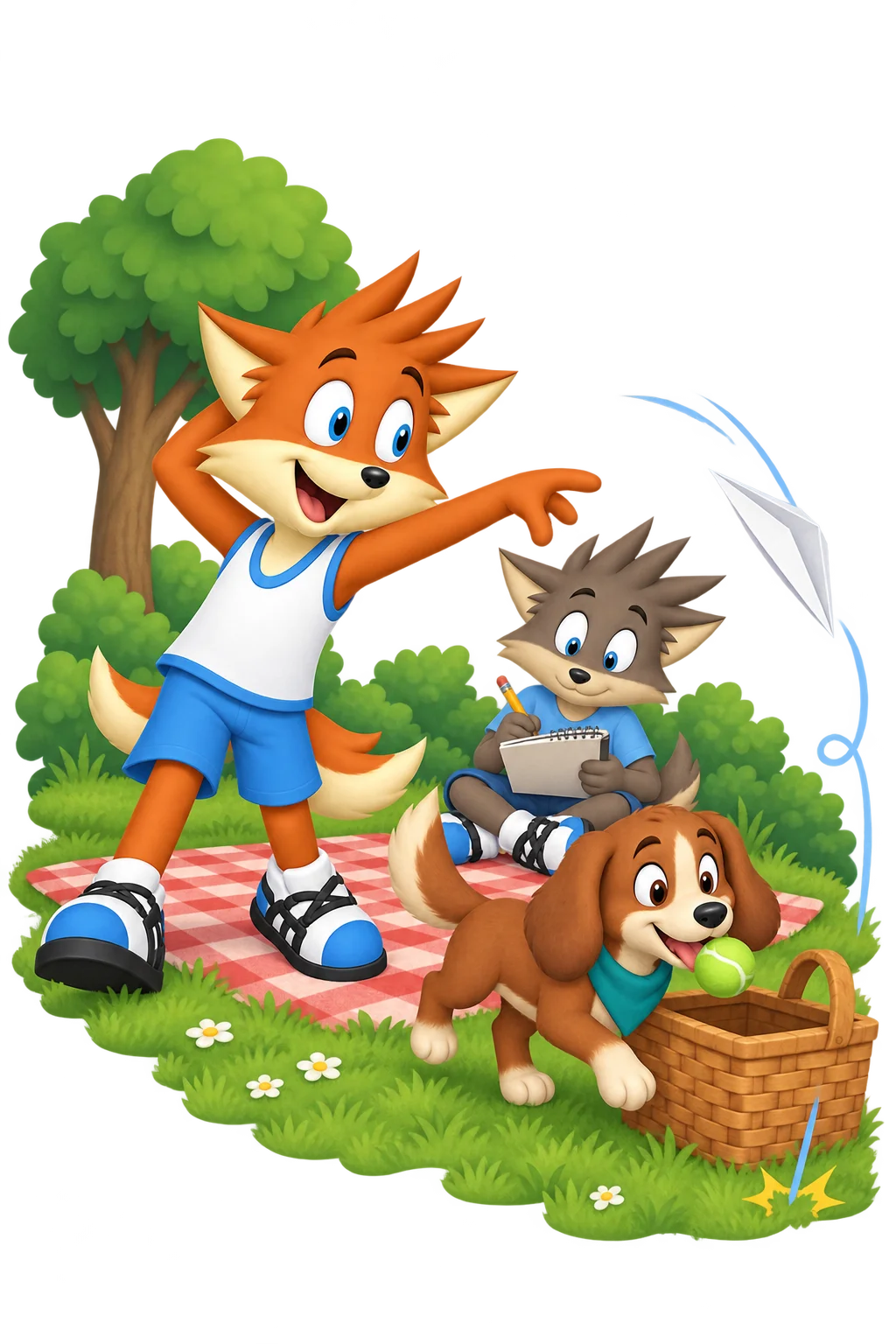
The dog brings the ball again with magnificent optimism and drops it at the feet of someone reading. The reader scratches one ear, points to the basket and returns to the page. At the picnic you later offer a ridiculous two-minute paper-airplane contest. One friend says no and keeps sketching. You launch your own crooked plane, applaud its immediate surrender and leave the sketchbook outside the joke.
An illustrative everyday situation
Launch one comically crooked paper airplane after a friend declines the contest, while a dog returns its ball to a nearby basket.
Too little
Fear of awkwardness keeps every impulse private.
A possible delight never appears.
A fitting response
You offer one harmless game and accept the answer.
Fun remains available without a toll.
Pursued too far
You repeat the invitation or use refusal as material.
The other person becomes a prop.
A game stays playful only while leaving it is easy.
A person may watch, join later or prefer another pleasure. Their refusal does not spoil the moment; it tells you which game is actually shared.
Playfulness can loosen self-importance and create a small common world. It cannot convert discomfort, grief or risk into fun by renaming them.
Offer a tiny observation game once; drop it if attention is elsewhere.
Invite a harmless challenge that does not expose or rank anyone.
Make the joke about the stubborn object or your own attempt, not a colleague’s identity.
Benevolence wishes another well; Playfulness may offer delight as one expression of that wish.
Playfulness enjoys make-believe; Sincerity keeps the invitation and response honest.
Mockery can masquerade as Playfulness. Genuine play does not make one person pay for everyone else’s laugh.
Demanding high spirits can look friendly. Playfulness leaves grief, fatigue and reserve unjudged.
Offer a small game, not a test of affection.
Make yourself available as the comic subject.
End while the joke is still welcome.
Invite one person to a brief harmless amusement and prepare an equally friendly response to no.
Invite someone into harmless fun and accept when they would rather watch.
Can this person refuse without becoming the joke?
Would the play still feel kind if I were in the exposed position?
Play never overrides consent, safety, property, grief or another person’s need for quiet.
About these practices · DisclaimerSeven selections to return to through the week. Follow a source link to read the surrounding passage.
Bobby dropped over the wall and scampered about, taking a merry part in the play.
Eleanor Atkinson · Greyfriars Bobby · paragraph 856 · excerpt
For playfulness, this opening witness keeps delight compatible with an easy refusal. The surrounding narrative supplies a concrete literary witness rather than an abstract maxim about virtue.
A soft-hearted little mistress and merry playmate was here, generous food, and human society of a kind that was very much to a little farm dog's liking.
Eleanor Atkinson · Greyfriars Bobby · paragraph 323 · excerpt
For playfulness, this second perspective shows comedy surviving without a captive audience. The surrounding narrative supplies a concrete literary witness rather than an abstract maxim about virtue.
This foot-seizing game was Lad's favorite romp with the Mistress.
Albert Payson Terhune · Lad: A Dog · paragraph 1053 · excerpt
For playfulness, this literary moment treats invitation as lighter than obligation. The surrounding narrative supplies a concrete literary witness rather than an abstract maxim about virtue.
“Then White Fang, to show his friendship, will have to be chief mourner at the funeral,” laughed the master.
Jack London · White Fang · paragraph 878 · excerpt
For playfulness, this counterpoint locates fun in shared responsiveness, not pressure. The surrounding narrative supplies a concrete literary witness rather than an abstract maxim about virtue.
As Buck grew stronger they enticed him into all sorts of ridiculous games, in which Thornton himself could not forbear to join; and in this fashion Buck romped through his convalescence and into a new existence.
Jack London · The Call of the Wild · paragraph 225 · excerpt
For playfulness, this source passage lets exuberance remain harmless through proportion. The surrounding narrative supplies a concrete literary witness rather than an abstract maxim about virtue.
At such times Buck did not attempt to stay him, but loped easily at his heels, satisfied with the way the game was played, lying down when the moose stood still, attacking him fiercely when he strove to eat or drink.
Jack London · The Call of the Wild · paragraph 313 · excerpt
For playfulness, this observed detail offers a comic counterweight to self-importance. The surrounding narrative supplies a concrete literary witness rather than an abstract maxim about virtue.
And to think that the surly brute was once an innocent puppy, all legs and head, full of fun and play, and burning with ambition to become a big, good dog and bark like mother.
Jerome K. Jerome · The Idle Thoughts of an Idle Fellow · paragraph 218 · excerpt
For playfulness, this closing witness asks whether the game still belongs to everyone. The surrounding narrative supplies a concrete literary witness rather than an abstract maxim about virtue.
Read freely, follow the eleven-virtue program, or adapt this collection in My Virtues. Warmth never removes the right to choose.