Too little
Giving up the choice
They have helped, so I should sit where they put me.
A useful kindness is allowed to settle a preference that was never asked about.
The chair is welcome. You would like it facing the conversation.
Readiness to regard one's own dignity as worthy of protection.
Self-Respect recognizes your standing as a person whose choices and needs matter. Receiving assistance does not reduce that standing. You may welcome another person’s effort and still direct the part of the decision that belongs to you.
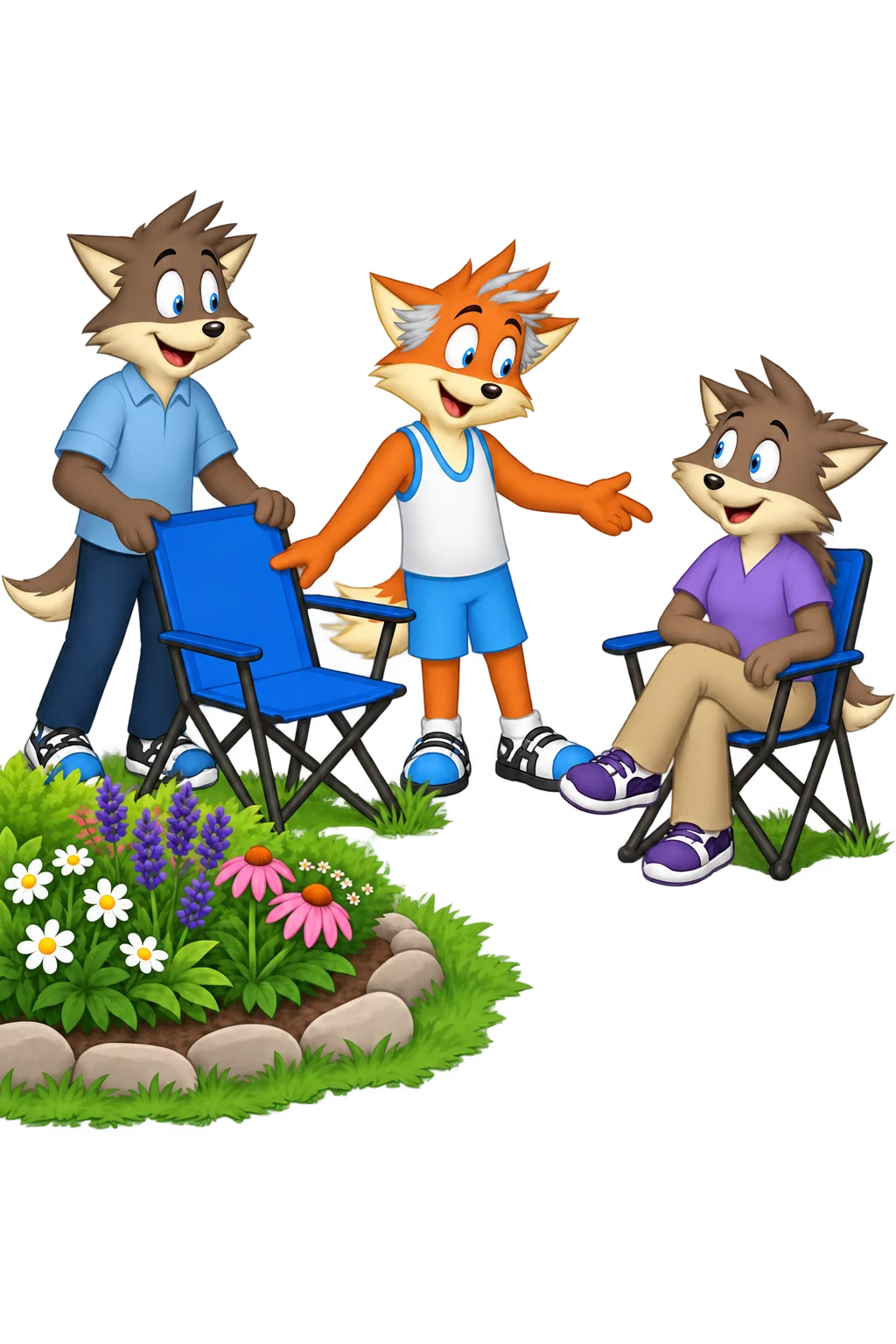
A friend unfolds a chair for you in the garden, facing a beautiful flower bed. The conversation is happening in the other direction. “Thank you. Could we turn it toward everyone?” accepts the help and states the preference. You came for company; the flowers will survive without your supervision.
An illustrative everyday situation
Accept help with a chair while asking to face the company you came to join.
Too little
They have helped, so I should sit where they put me.
A useful kindness is allowed to settle a preference that was never asked about.
A fitting response
This helps. I would like to face the group.
Thanks and a clear choice can occupy the same sentence.
Pursued too far
If I need help, I have already lost.
An unnecessary test makes ordinary cooperation feel like defeat.
Needing a hand does not remove your voice.
Someone may be unable to provide the help in the way you prefer. Discuss the actual limits together. Equal standing does not mean every request can be met, but it does require being heard.
You may ask more directly for what works, with less need either to submit or to prove you need nothing. Other people can understand how to help without guessing or assuming.
A person directs every question to your companion. You may say, “Please ask me directly,” and describe any communication help you want. Ageist assumptions can be challenged without refusing useful assistance; responding is an option, not another burden you must carry.
A family member plans a full afternoon together. You would enjoy an hour. Suggest that duration without offering your whole energy as the price of company.
Gratitude acknowledges a helpful contribution. Self-Respect keeps your own preferences and standing visible.
Tact helps express the preference considerately; Self-Respect supplies the reason it deserves expression.
Self-sufficiency is not a measure of dignity. Ordinary life includes receiving help.
Respect for yourself remains compatible with another person’s limits and choices.
Notice where help is wanted and where a choice is yours.
State a preference before resentment has to speak for it.
Invite a workable arrangement that considers both people.
In one ordinary exchange, name a preference or a form of help that would suit you. Choose a situation in which speaking is comfortable and safe.
Accept assistance while keeping your own voice.
What choice am I assuming I must give away?
How could I ask for assistance while keeping that choice clear?
Illness, disability and dependence do not diminish dignity. If someone persistently overrides or mistreats you, appropriate trusted or professional support may be needed; perfect phrasing is not your responsibility.
About these practices · DisclaimerSeven selections to return to through the week. Follow a source link to read the surrounding passage.
Young people themselves often resent this attitude on the part of their elders; they feel set aside and belittled as if they were denied the common human experiences.
Addams questions protective exclusion of the young. Read across generations, the passage asks whether well-meant protection has removed someone’s voice.
At all times, and in all places, my own eyes are sufficient to look to my fingers
Montaigne describes keeping his own standard even in a small game. Self-respect includes a judgment that does not disappear when someone else is present.
you will always find those who think they know what is your duty better than you know it.
Emerson describes pressure from other people’s judgments. The sentence supports taking your own considered view seriously without exempting anyone from responsibility to others.
as for men, carry not thyself either tyrannically or servilely towards any.
Marcus Aurelius · Meditations · Book IV, XXVI · Meric Casaubon translation · excerpt
Marcus names two ways to lose an equal footing. Accepting help can avoid both command and surrender.
the dependence of classes on each other is reciprocal
Addams describes mutual dependence rather than a one-way relationship between benefactors and recipients. Receiving assistance need not place someone outside a relationship of equals.
The principal charge we have is, to every one his own conduct
Montaigne turns attention back to the life a person is responsible for living. Concern for others need not erase that person’s own choices.
nor more yielding upon occasion, than in right I ought
Marcus Aurelius · Meditations · Book I, V · Meric Casaubon translation · excerpt
Marcus reflects on receiving kindness without giving away judgment. A favour need not determine an unrelated preference.
Read freely, follow the thirteen-virtue program, or adapt this collection in My Virtues. Health and independence do not measure your worth.